
Pilates Teaser Tips for Beginners
If you’re struggling with the Pilates teaser on the Mat, you’re not alone. It is a difficult exercise to get into our bodies, especially on the Mat, when we don’t have assistance from other parts of the Pilates apparatus. Here’s how to get better at Pilates teaser: let’s talk about why it’s complicated, what you can do to improve it in your body, and what you can do after.
Welcome to Online Pilates Classes, the most supportive Pilates community worldwide. Enjoy new weekly classes from our incredible teachers. Download the OPC app today.
The teaser was one of the hardest exercises I ever experienced because it’s often taught in the first class you go to. But maybe you’re not ready to do it yet, and so then you feel compelled to make the shape happen, but not necessarily be ready to do it. And unfortunately, that’s a typical experience. And it’s not because teachers don’t care. It’s because people are taking classes at all levels. They’re taking the class time that works for them. They’re taking an online class. So it’s important that you know all the exercise Pilates that are setting you up for success for a better teaser, and then all the different things you need to connect to get a better teaser. And I wanted to say that teaser is not a peak pose in Pilates. It’s just one of the ones that’s iconic for Pilates. It’s very photogenic. It has great lines. It’s pretty impressive. But there is no peak position or exercise in Pilates. You’re looking for a balance of strength and flexibility in every Pilates exercise you do. And so teaser is going to reveal where you have work to do in your Pilates practice. So let’s get into it.
Why the Classical Teaser Feels So Hard
So why does the classical teaser feel so hard, or Pilates teaser exercise in general? So the teaser is difficult or feels hard because it’s easy to sit up on top of your sit bones, kind of like a yoga navasana, and work your quads more than working from your full body. The teaser requires your arms to be connected to your back, your legs be connected to your center, and your entire body reaching and working together. Nothing over working, nothing under working. That’s hard. It’s hard ask for a Pilates body to do, anybody to do, right? So especially if you’re newer to Pilates, it is going to have more demands on you as you become more advanced. I’m going to tell you right now the teaser does not get easier, but it gets more possible, and that’s what you’re going for. If you are new to Pilates and you’re wanting to understand the benefits of what we have going on in our Pilates practice, check out our video about the benefits of Pilates.
Build Your Teaser Base: Foundation First
So how do we build your teaser? Or how do you know you’re ready to have teaser in your Mat practice? Here’s how to build strength for Pilates teaser: the exercises I look for, or I would have you replace teaser with until you’re ready, is going to be the roll up, rolling like a ball, open leg rocker, to name a few. We could talk about swimming and Swan as well. But I really am looking at the shapes and the connections in your roll up, rolling like a ball, open leg rocker. And why is that? Well, the roll up is literally the teaser just flipped on one side, right? So I’ll show you what it looks like. And what’s nice, if you have access to a strap on the Mat, is it helps you get warmed up. So the roll up comes at the beginning of our Mat practice, we take our arms overhead. You’re going to do this same arm position in your coming up teaser, and then you’re going to round forward. And so if I were to tip this shape up, I would be in teaser, right? So if this is a challenge for you, then adding the teaser into your practice is actually only setting you up to be frustrated, right? Instead, when you’re in a class, if there’s a teaser in the class, you can go back and practice your roll up. The connections and the strengths you’re building will be compounding the rolling like a ball.
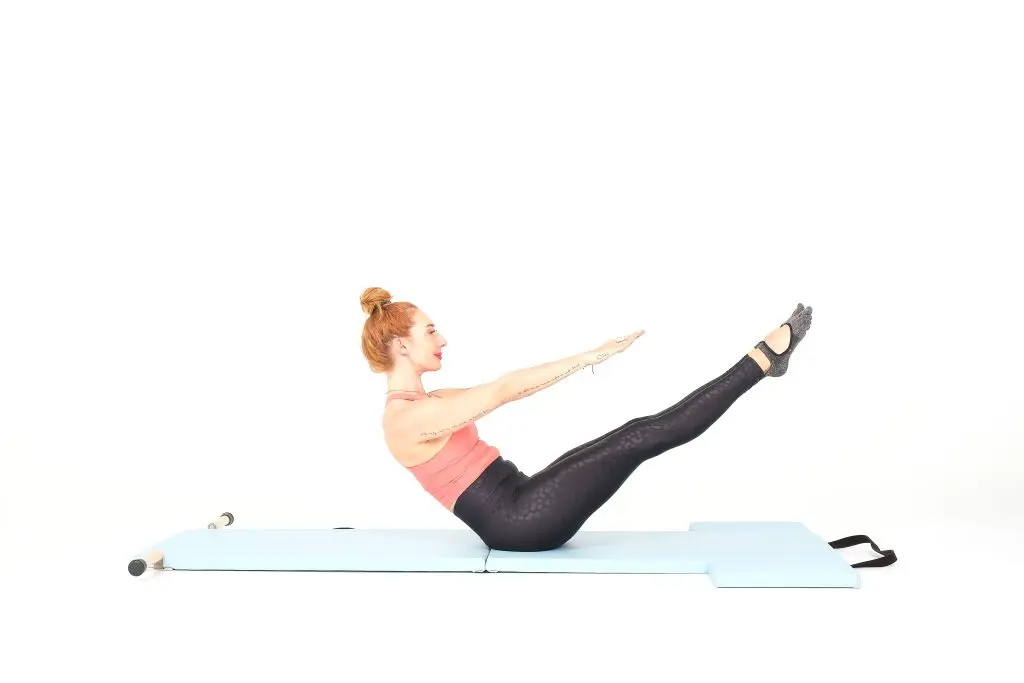
Why is that a great, accessible exercise to do for Pilates? Well, for your teaser, well, it is a great pre Pilates teaser, for sure. So right here, we’re going to be in this nice shape. We’re going to roll to our back, and we’re going to roll up and we’re going to balance right where we want for our teaser, the knees being bent. Make this exercise easier. Before you do your open leg rocker, if this is going well, then you’re going to add open leg rocker in. An open leg rocker is a rolling teaser, because here’s teaser. So if open leg rocker is in your practice and it’s going well for you, then adding the teaser in will be a nice challenge. However, if you struggle with rolling like a ball or open leg rocker, you can see how you’d want to get better at those exercises before getting into your teaser. Alright. Now, there is an exercise that Joe Pilates gave us that really helps you kind of use a little bit of a momentum combined with your strength, and that is the rolling like a ball into a teaser. That’s a great way to practice and get you into your teaser practice. So especially, use these three exercises, or any Pilates exercise that is a challenge for you in place of teaser till you’re ready to add it in. If you are new to Pilates or new-ish to Pilates and you’re wanting to dive deeper into your practice, we have this great video for beginners that will help you understand the proper form, transitions and flow for your Pilates practice.
Unlocking the Levels: Teaser Variations
So let’s dive into all three parts of our teaser on the Mat, because there are three parts, and often people only know about the first one, or just coming up into it, or they know a prep. So let’s go into what the teaser is. So first of all, I mentioned those few exercises I look at to see if you’re ready for the teaser, and I didn’t bring up the 100, and the 100 is actually a preview to what your teaser could be when you start your Mat practice, because when you do your teaser, you actually start in your 100 start position, and then you’ll curl up for your first teaser. Come through the 100 into your teaser. You want your toes in line with your eyes. A lot of people get their legs too high, and then you want to take your arms they’re parallel to your legs. Lift them up. This is Teaser one. I’m going to leave my legs there, and I’m going to try to get my arms to touch the Mat before my head does. Now, if you can’t go all the way down, you don’t you can just go halfway and then come back up. But you’ll do three of those. Yeah, that’s teaser one. If that’s going well for you, you can do teaser two, which is where the legs go up and down. Now, if double straight leg stretch on the Mat is you swinging your legs around. Then teaser two is not available to you yet. If these are going well, and going into the teaser went well without momentum, you can go down for Teaser Three, and you come up. And so you basically just go in and out of this. And you’re taking everything you did from your teaser one and your teaser two, and you’re bringing it all together for your third teaser. So there’s essentially three reps of each totally nine, and that brings you to the full teaser.
Mastering the Classical Teaser: What Could Go Wrong
So in mastering the classical teaser, let’s look at some common Pilates teaser mistakes because there’s a lot of things that can go wrong. So let’s dive into it, because it’s not about being perfect in your Pilates practice, but it is about noticing what your tendencies are. Some people’s tendencies are to hold their breath. I promise you, breathing is very key to this exercise. What you want to make sure you’re doing is exhaling to come up, inhaling to go down. That’s going to help you get nice and long. It’s going to make the body feel like it has capacity and possibility in doing this exercise. Another thing that goes wrong is a lot of people tend to arch to go back. When they’re on the Mat, they’re going to arch their back like ah, and that’s fine if it’s with muscles, but if it’s just letting everything go, it’s going to make it really hard to come back up, or they confuse their shoulders being forward as if their spine is round. So you do want to have that arm back connection. I talk a lot about this in the workshops I do on my tour. You want to have your arm back connection on so that your arms are actually helping lift your upper body off your legs, and then one that I’m sure you’re frustrated with, because a lot of people are, is those hip flexors over working. That often happens when we get too high up on our sit bones, or the legs get higher than the eyes. When the legs are higher than the eyes, or you’re too up on your sit bones, your quads are going to overwork. It doesn’t mean that I want your quads to not work at all, they’re going to work. It’s part of the anatomy.
But I also want your inner thighs, hamstrings and glutes, to participate. So you’ll want those toes to be in line with the eyes. You can get all the muscles around your thighs to help support you, so that your legs are working with your center when you’re lowering and lifting your legs, if you feel like your upper body is going to leave and lower down. When your legs are lowering down, that’s a common sign. They are not moving your legs from your center, and you might be overworking those muscles. There’s a few other things that could be going on as well. A lot of people arch their back, or they throw themselves up into it. You should be able to balance. But here’s the thing, we don’t want you to just like, hold like you’re going to take a picture in each pose you want to make it move, and that’s why the breath is so important. And so if any of these complications or culprits are affecting your Pilates practice, let me know in the comments below. We have some great workshops on OPC that can help get you connected. We have a fast workshop on OPC that helps you if you’re more quad dominant, we have an arm back connection workshop that helps you if you tend to round your shoulders forward, both of those are going to help affect the teaser practice that you’re looking for.
Beyond the Mat: Rolling Teaser + Reformer Teaser
All right, so beyond the Mat, there’s actually some amazing ways you can support your teaser practice. If you have access to a full studio, in an ideal world, you would be doing teaser on the Cadillac or tower first. This is actually going to help you understand how the head moves with the body and teaser. It’s going to keep you from like throwing your head or using your neck to get into it. It’s also going to help you with the timing and where to balance from. Super helpful if you want to practice at a wall. We have a great tutorial. It’s also in our accessories flashcard deck where you do teaser pilates at the wall. It’s nice to have a place to just put your legs so they’re eye level, and you can practice what you’re doing. As your teaser gets stronger and better, you will be able to move it on to the Reformer.
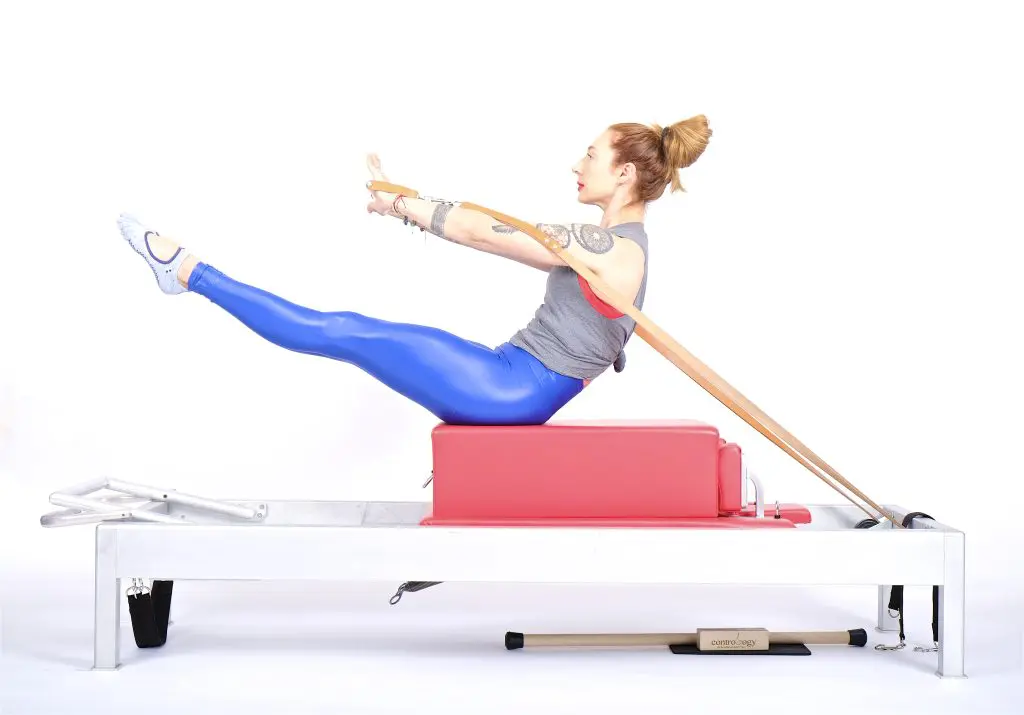
The Pilates Reformer teaser is its own beast. I would argue it’s actually more fun and a little easier to do than on the Mat because you have the springs. However, it does add in the level of extension that you need to have. So it is a bit more complicated. If you have access to other pieces of equipment, like spine correctors or Wunda chairs, you’re going to get the connections I mentioned you needed much quicker than if you’re only doing the Mat. That being said, don’t let that devalue the Mat. The Mat is what Joe Pilates wanted us to do. It’s very difficult. In his book return to life, he talked about, you do the hundred till you can do the hundred, and don’t do the roll up. Till you can do the hundred, then you can do the roll up, but you can’t do the roll over, you can do the roll up. And there’s some to be said for really allowing yourself to get juicy with the work and let your body get strong enough to do it.
OPC Teaser Tips: Personalized Pilates Guide
If you have questions or needs, there’s so many different ways to use props and other things like that. At onlinepilatesclasses.com. Our members can submit videos of themselves doing the teaser, and I’ll be able to see what is going on. Are you throwing yourself up? Oh, it is. Your arms. Actually, your quads are overworking, and I can give you personalized advice to your practice, so you’re not guessing something I can’t do here, because I can’t see you right? But there are so many different body types, and we have different lifestyles that we lead. And so we’re going to have muscles that are more dominant. Your dominant muscles are going to show up in your teaser, as will the weaker ones. And so that’s where using your teaser to really reveal where else you have work to do in your Pilates practice is the key. It is the goal, as opposed to getting hard on yourself for your teaser and what it looks like. All right, if you would like to understand the foundational exercises of the Mat better, we have an incredible workshop and a 15-minute full-body Mat Workout for free. Go to fullbodyin15.com, to get that workshop and that workout, and it will build you towards your future teaser.
Your Teaser Pilates Exercise Journey Continues
The good news about all of this is your teaser journey will always continue. I’m 20 years into doing my Mat Pilates practice, and I get something new out of my teaser each and every day. And so if there is any exercises I mentioned that you struggle with on the Mat that you would like more advice on, drop them in the comments below, because that can reveal why teaser is so difficult for you. If you are able to do teaser, get into the position, then stick with teaser one for a while. Allow yourself to get good at it. Do three sets of three of those. Then as you have more connection to your legs in your center, add in teaser two. Teaser Three, that could be years into your journey, and that’s totally fine. It’s absolutely fine to take your time. I really hope that you do it really will benefit you and the Pilates practice that you’re doing, because Pilates is a practice and it’s here to help you with your whole life. I know that it’s really easy based on what you see in videos on an Instagram that we have to be all excited about getting an exercise, but the reality is, we’re only doing Pilates so that we can hike and climb and travel and pick up kiddos and run with our pets and and grab something high up off the top of a shelf, so allow your teaser to help connect your entire body work it evenly so you can do the things that you care about in your life.
Improve Your Pilates Reformer Practice
I am so grateful for you. I really hope this video was helpful. If you like us deconstructing an exercise in this long form, I would love to know what exercises you want us to do next in the comments below. Would you like to explore all the different parts of the Pilates teaser on Reformer? I hope so. It’s one of my favorite. So drop in the comments below. We always go live on Sundays answering your questions at 9am Pacific Time. And I really mean it. If you’re an OPC member, I am happy to look at an exercise you’re struggling with and give you personalized pointers for you so you can stop the guessing game and deepen your Pilates practice wherever you are, go to OPC YouTube to join us. Have an amazing day.