Pilates Roll Over Exercise Complete Beginner Guide
Hey there. If you’re struggling with Roll over on the Mat, you’re not alone. It’s probably one of the most misunderstood exercises when it comes to an advanced Mat practice. Today I want to do a deep dive on this exercise. Who it’s for, what to be thinking about, what are you working up towards, and what to make sure you’re avoiding? Because yes, there are a lot of fears around going upside down when it comes to our Pilates practice. So we’re gonna dive into all of that.
Welcome to Online Pilates Classes, the most supportive Pilates community worldwide. Enjoy new weekly classes from our incredible teachers. Download the OPC app today.
What Is Roll Over?
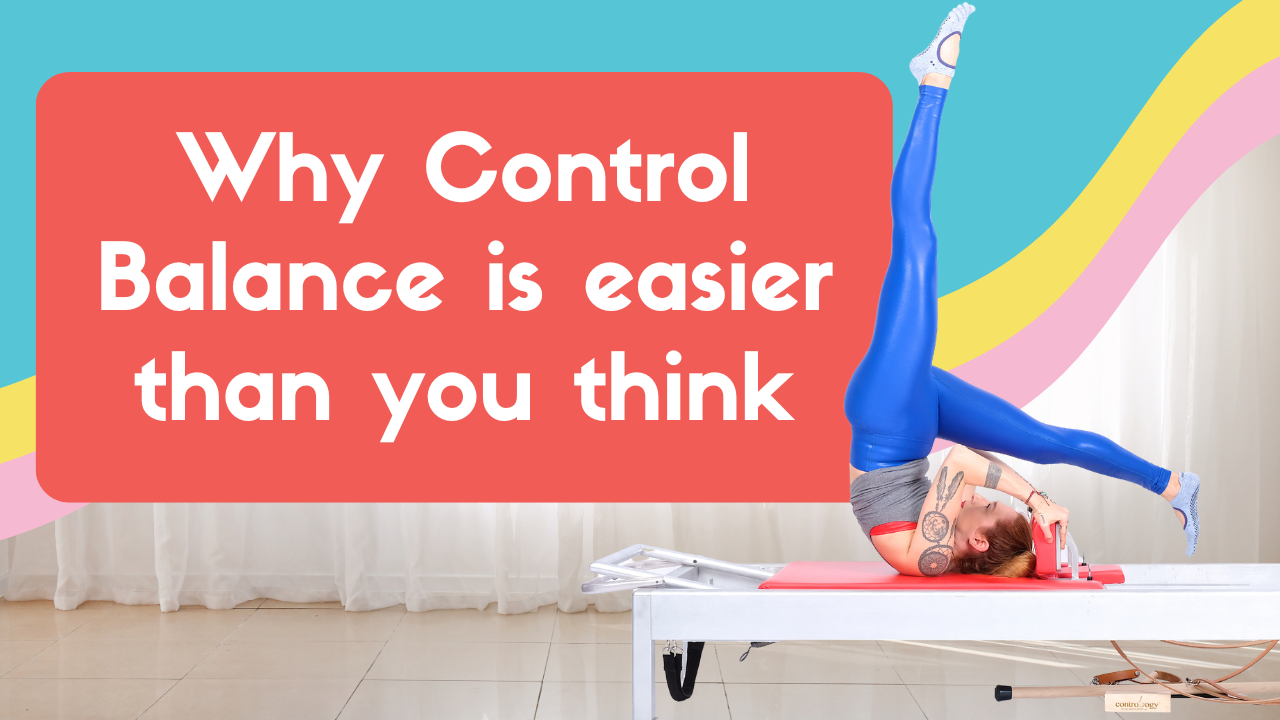
Hi. I’m Lesley Logan, co-founder of onlinepilatesclasses.com and let me tell you, because of my hypermobility and my just desire to do everything with everybody, I definitely learned Roll over on the Mat a little too soon for my practice. In fact, I’m not alone in that. You might not be either. Roll overs often rush into a lot of people’s practices without the foundations built up for it. And if you are hypermobile, you can look like you’re doing it, but it might not feel so great. And if you’re really tight, you can feel frustrated that you can’t do it yet. And so because it’s one of the classical Mat exercise that Joe Pilates gave us, and it’s the third one that you’re going to meet when you start your Mat Pilates practice, right? It’s hundred, roll up, then roll over, I really want to make sure that we understand all the ins and outs that go into it so you can have some success. So what is roll over on the Mat? Well, it’s a classical Mat Pilates exercise that takes your takes your body upside down, and it’s going to challenge you to do it in a controlled way. It’s really combining a few different Mat exercises in one it’s going to challenge you to move your spine smoothly, while also using control and a great stretch for your entire back and roll over is not about flexibility, like only just being stretched out. In fact, it really is going to challenge the strength and stability in your shoulder girdle and in your hips, while also giving you the flexibility and stretch in your spine so controlling yourself over and controlling yourself down, truly embodies all that Pilates is challenging us to do. If you’re wanting to see the roll over or feel a roll over in the order that Joe Pilates gave us, check out our class right here. It’s the full Joseph Pilates order on the Mat with full exercises.
Is Roll Over Right for You?
So is the rollover right for you? Here’s the deal. It might not be, and that’s okay, right? There’s no race. We’re not all trying to be advanced tomorrow. So if you are new to Pilates, if you have neck, shoulder or lower back issues, if you have fear around going upside down, you may want to just skip it, and that’s cool. You’ll just repeat more of the exercise that come before and after it. And as your body develops strength and stability, you might want to add it in if it’s right for you. I just want to reiterate in a different way, choosing to skip the roll over does not mean that you’re behind. It means you’re listening to your body. And at OPC, we believe it’s brave and courageous to replace what you can’t do yet with something that you can. So make sure you’re focusing that time with your roll up, your rolling like a ball, your open leg rocker, and those single leg circles together, those will build you up to a roll over. So before you even try the roll over, there are certain things I’m looking for in your practice before I would give it to you. So as I mentioned earlier, rolling like a ball, huge exercise, gateway exercise, to all of our overhead exercises. Because if, if in your rolling like a ball, you cannot balance on your shoulders without resting on your neck. We’re not able to take legs straight out and be a little more distal. And I’ll show you what roll over is in just a second. So we’re on the same page. Open leg rocker takes that roll in like a ball, but adds a straight leg stability to it and stamina to it. So if you can then do open leg rocker, we have a fighting chance to be able to do part at least one direction of the roll over. Single leg circles, being able to circle our leg in either direction without the hip clicks, without the hip hiking, very, very key. And, of course, roll up. It’s predecessor, the exercise that comes before the roll over. It’s stretching the back in one direction, especially the back of the legs, but the whole back side of the body in one way. And then we roll it like a ball upside down. Add some single leg circles to it, and now you’ve got your roll over. So let’s dive into this exercise together so you can see those exercises listed into it.
What You Need Before You Try It
So if I’ve just finished my roll up, I’m going to roll down. Ideally, I’ll have handles. And I do have a great workshop at OPC, at onlinepilatesclasses.com, that if you don’t have handles, or you struggle with going overhead, it’s called bottoms up that can assist you. So then what we’ll do is we’re going to reach into our handles if we have them, if we don’t, your arms are down by your side. The legs ideally start on the ground from the roll up. But if you need to start them higher, you can right. It’s just going to be a little bit harder, I think. So your center is in. You’re going to exhale, to take those legs overhead. Now, really, really key. This is where flexible people have a hard time, because everything collapses. But as you can see, is when my legs get up, this angle right here is going to stay the same. I’m going to lift my hips and now the space between my legs and my chest is gonna stay the same unless my back continues to take my legs overhead. But I don’t get to take my legs to my chest. My back has to reach my legs as far as it can. You flex the ankles. You open the legs. So now I’m in the open leg rocker, right? I point the toes to roll down. I’m controlling everything down with my center. And then my legs do that Single Leg Circle, though it’s both legs together, and then I get to repeat it. So my legs stay at the angle of my pelvis that I started. And if my back can stretch more, I can reach more when I flex my ankles, I feel to stretch the back of my legs. I open point, and I’m not letting those legs collapse onto me. I’m having to hold them into space before they circle together. Then you reverse it. The legs go open. They go over. I reach. This is so hard because I don’t have the inner thighs to help. Squeeze the legs together. Flex the ankles for the extra stretch, point. And I’m rolling it down. I’m doing that reverse, roll up, down. The legs come down to where I can manage it. They open and then they flex the stretch, bring it together and roll it down. Now, if you struggle with stability of the upper back, can you see how this exercise would be difficult? So that’s where you want to go back to your rolling like a ball. And challenge, can I balance on my shoulders? My head might touch the Mat but not be on my neck. If you’re struggling with your single leg circles, you’re getting hip clicks, or your pelvis is wobbling side to side, you can see how then, as those legs are getting further away from you, that’s circling around, instead of it gathering up strength, it might take you out of your strength. So focus on those format exercises, rolling like a ball, open leg rocker, Single Leg Circle, and your roll up, and eventually your roll over will be this nice, juicy, stability, stretch, strengthening exercise it takes you for the rest of your Mat practice that comes after it.
What Roll Over Should Feel Like
So what should the roll over feel like? I think that’s important to have some understanding, because maybe you might feel it differently, and it still be okay, but you might feel it differently, and that’s why it doesn’t feel okay. So it should feel like the weight of your body is supported through your center. That means pelvis, stomach and shoulder girdle, never on your neck. It should feel really nice and relaxed your you should be able to breathe in and out evenly as you move your legs should feel like they’re actually circling from your center and your outer hips, not just the top of the legs, right? Like, not like they’re hanging off. And it should feel like, as your body comes down, it’s ready to go into the next one, versus kind of it’s hanging off and you have to regroup, meaning, like you’re hinging off of your lower back. Sometimes that does happen. It should feel very broad across your shoulders. If you are someone with tight shoulders, it’s not going to feel as awesome, and that’s why it’s important to really enjoy the full Pilates system that Joe has given us. Oftentimes, many people skip exercises they don’t like because they’re not good at them, and then they’re missing out on getting stability and mobility through their shoulder girdle, meaning that exercise is going to feel really stuck once you get upside down. So it should feel strong, stable, easy to breathe, and if you’re feeling anything pulling, a hanging or tension, you’re holding your breath, it’s important that we take a look at that before you continue.
Common Mistakes to Avoid
So let’s get into those common mistakes to avoid, just because if you’re doing these we do need to look at them all right. So one of the common mistakes to avoid is swinging the legs around right. When you swing the legs to get them up overhead, you’re using more momentum than you are strength that might get you over, but then guess what? You get too far over, and that takes us to our next common mistake, actually getting up onto the neck or dropping the chin towards the chest. Watch yourself. Oh, you can’t watch yourself, but film yourself and doing your roll over, next time you go over. A lot of times people go overhead, they drop their chin down. When you drop your chin down, you flatten your neck to your Mat, or even on your Reformer, if you’re doing overhead exercise in the Reformer. And then we lose the tripod. The tripod is your the back of your head and your shoulder girdle, right? It’s not your neck. Your neck’s nice and loose, so you want to make sure that we’re not swinging those legs that would take you too far over onto your neck and then dropping your chin, and now we’ve lost all of the stability.
So and other common mistakes to avoid are going to be arching your back when you circle your legs around that means your legs went too far, and again, that’s meaning you’re going to need to use momentum to get back overhead. Some other mistakes I want you to avoid is actually taking your legs too far, over off behind you, or then dropping them down, because sometimes it feels like it’s an extra stretch, but then you lose all the center strength. You actually to let go of that, to allow the legs to come in, you actually let go of the hamstrings too, which does make circling the legs a lot harder. And another thing that is easy to do, and a common mistake I love you to avoid, is actually taking your legs up to go over. So this is not a reverse jack knife. This is absolutely like the ceiling got low and we’re just going over and controlling that descent down. It should feel like a strength exercise that adds this really awesome stretch, versus a stretch exercise that looks like something that would be impressive at a circus. If you like diving into common mistakes, if you want to avoid making mistakes in your Pilates practice, check out this video we have, common mistakes to avoid in your first Pilates class.
Easier Ways to Build Up to It
And just some reminders to make roll over easier to build up to. So again, we mentioned how important the roll up, rolling like a ball, open leg rocker and single leg circles are to getting to your rollover. But something else that’s really important is Jackknife while it comes later in our Mat practice from Joe Pilates, when you first learn jackknife, you learn the over. Eventually you’ll add the up, you’ll learn the over, and you come back down. And when that gets easier, you go over up. So while the up is not as important to the roll over, having a strong Jackknife and introducing that first is going to make adding roll over easier. Let’s be honest, roll over has a lot of choreography. There’s a point and flex of the feet, the legs are circling this way. They’re circling that way. Jackknife allows you to even take your rolling like a ball and land in a jackknife and can add in overhead exercises with straight legs in sooner to your practice and test that out before you’re like, Oh, now I got to add this whole choreography to it. Trust me, the circles were a lot for me, too. So I really do want you to take those first four and then as you’re ready, add in the first half of Jackknife, when you can control that, and you can build onto that, then you’re ready to introduce roll over. And I know it’s confusing, because it’s like, Well, Jackknife comes so far away from the roll over, yes, but omitting exercises that are not right for you yet and replacing them with exercises that are going to build your foundations is brave and courageous. We already said that right. So repeat after me. It’s brave and courageous. And listening to your body and as that Jackknife gets stronger, rol lover is going to become something easier to add into the practice.
Tips for Practicing Roll Over Well
Some more tips to practicing roll over well. Here’s the deal. In a perfect world, you would have access to other pieces of equipment. So in addition to the Mat exercises I talked about, if you do have access to your Tower or Cadillac leg springs, leg springs in the air, airplane, going to be super, super helpful for building up the strength that you need. Rolling stomach massage. Also an incredible tool for building up the strength and stamina to get up onto your shoulders, even the simple doing arm springs to help strengthen your back, going to do a lot of great work for you. Then, you know, I love the spine corrector. You know, if I could make sure everyone had a home piece of Pilates equipment would be a spine corrector, using the spine correct to do the leg series. But also, you can practice the roll over with the spine corrector, because now it’s going to take your hips a little higher off the ground and kind of start you at an easier starting point. And you can really practice your roll over there. You can also use the handles of your spine corrector, if you don’t have handles on a Mat, to kind of be something to reach into and pull apart to broaden your upper back right? So, I have more of that information in a really great spine corrector workout over on onlinepilatesclasses.com I also have it in some tutorials that we have here on this channel, under the barrels, under the spine corrector for helping you get overhead and doing overhead exercises.
So I’m really interested. I’d love to know where you struggle with roll over, what questions you have, you can drop them in the comments below. We do go live on Sundays at 9am Pacific Time answering those questions. If you’re an OPC member, you can actually send a video of you doing any of the exercises we talked about today, and the roll over to us through the community app, and I will give you personalized feedback on what homework you need to do. You might be ready to add it in. You might need to look at a few things. And wouldn’t it be nice to know? So I want you to go to onlinepilatesclasses.com/youtube if you’re not. If you like, to just dive into breaking down more advanced exercises like this. If this really intrigued you, I have a really great free guide. It’s really easy and it helps you kind of think about what you want to do for any exercise, whether it’s advanced or even intermediate. So you want to go to opc.me/advanced, opc.me/advanced.
Thank you so much for watching this video. You know it means the world to me that these are so helpful for you. We’ve been doing this for a really long time, and diving in deep like this to an exercise that either you avoid or you struggle with, it really means a lot that I can be part of your Pilates journey. So keep me posted in how this is helping for you, helping you, and share this with a friend who needs to see it. Thank you so much. Have an amazing day.