Why Do I Get Hip Clicks During Pilates and How Do I Stop Them?
Do you experience hip clicks during Pilates? I see you, I feel you. I used to have them too. In this video, I want to talk about why hip clicks happen and how to eliminate them so you can fully enjoy your next Pilates session.
Welcome to Online Pilates Classes, the most supportive Pilates-loving community across the globe. Enjoy new weekly classes from our amazing teachers. Download the onlinepilatesclasses.com app today.
Hi, I’m Lesley Logan, co-founder of Online Pilates Classes. I’ve been doing Pilates since 2005 and teaching since 2008. I had hip clicking during Pilates exercises for years, and I was often told to make my circles smaller or turn my leg out more. What I eventually discovered is that the more I engaged all the muscles around my legs and moved from my center, the fewer hip clicks I had. So let’s dive into how to help you with yours.
What Are Hip Clicks?
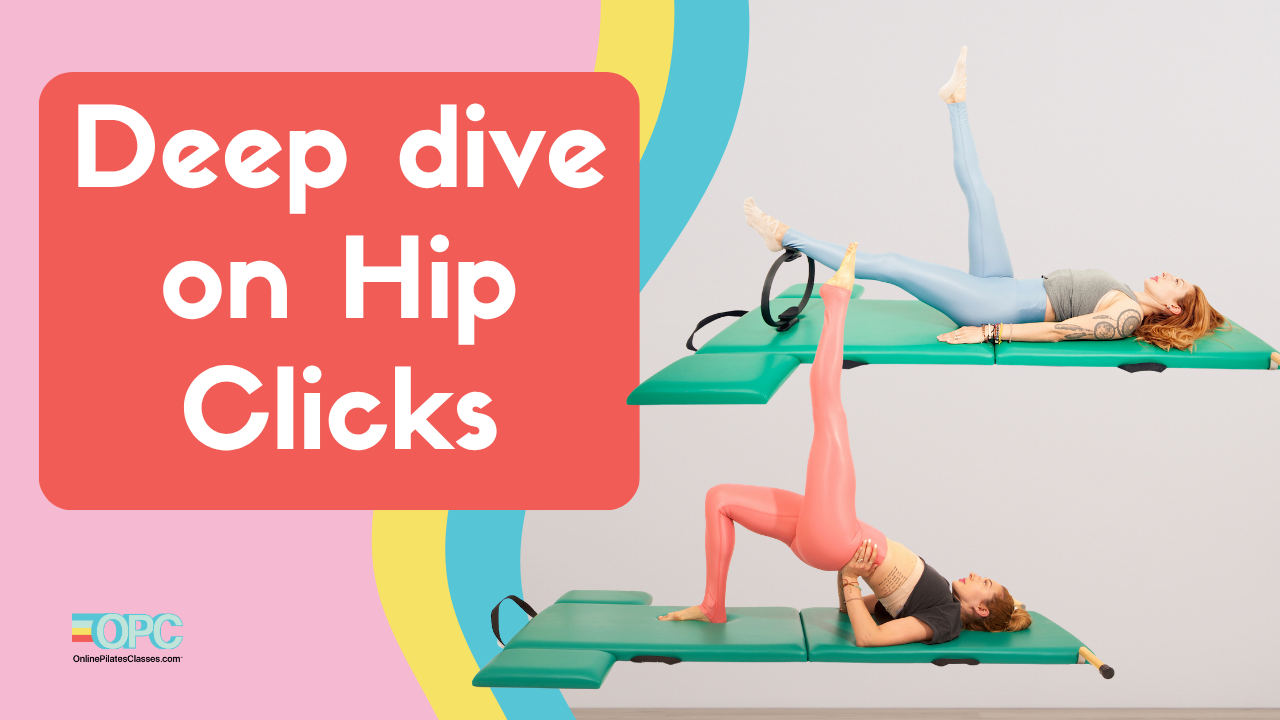
Hip clicks, also known as snapping hip syndrome, are a clicking or clunking sound you hear around your hip, most commonly during single-leg exercises like Single Leg Circles, Single Leg Stretch, Single Straight Leg Stretch, or Scissors. They tend to be a sign of where your body is not working from, a lack of steadiness, strength, or connection to your center, rather than a sign that something is wrong with you.
Pilates is designed to balance our imbalances. Hip clicks and clunks are simply audible signals of a muscular imbalance in the way we move. If you’d like to explore foundational Mat work at a slower pace, we have a 25-minute beginner Pilates Mat practice, check it out here.
Why Are Hip Clicks Happening?
When you move your leg in Pilates, up, down, out, in, or in circles, if you’re moving faster than your center can control, some muscles will overwork while others underwork. This creates an imbalance in how the femur moves inside the hip socket, which produces that clicking or clunking sound.
It can also happen when you’re moving at a pace your center can handle, but the surrounding muscles of the thigh aren’t activating. Your dominant muscles, typically the hip flexors, end up gripping and holding the leg up, while the muscles that could properly support the femur in the hip socket stay switched off.
In Pilates, your center isn’t just your abs. It includes the muscles around your hips, your torso, and your upper and lower back. When you think of leg movement as simply going up, down, in, and out, rather than initiating from your Pilates center or powerhouse, hip clicks become much more likely, especially when you’re newer to Pilates.
The good news is that there are Pilates exercises for hip stability that can address these imbalances, and there are ways to check whether you’re actually performing the movement correctly, because sometimes we think we’re extending the leg when we’re really just straightening the knee.
When Are You Most Likely to Notice Hip Clicking?
Single Leg Circles
The most common exercise where hip clicking occurs. The hip hikes up toward the ribcage instead of staying level, creating an uneven, unstable pelvis. Many people respond by making smaller circles, which actually reinforces the dominant muscle’s grip rather than fixing the problem. Taking the leg a little lower and making a larger oval can help recruit the inner thigh, hamstring, and outer hip.
Single Leg Stretch
Clicks often occur when the extending leg drops down rather than being actively controlled. Instead of pushing the thigh bone away as the leg extends, the back of the leg disengages and the leg falls, causing you to hang off your upper body muscles.
Scissors
Going too low is the usual issue. When the leg drops below what your center can control, you release some of the supporting muscles and the hip joint imbalance creates that familiar click.
Hip clicks can also happen when you’re anticipating them, tensing up, moving slowly with anxiety, and inadvertently releasing the very muscles you need to be working. And they can occur anytime you rely on momentum rather than maintaining a connection through your center.
In all of these situations, the click is simply a signal, a muscular imbalance in the movement, nothing more. Want to deep-dive into these foundational exercises? We’ve included them in a workshop series with a free 15-minute workout at fullbodyin15.com.
What Hip Clicks Are NOT
First, if you’re worried something is broken or damaged, it’s very unlikely to be that. If there is pain with hip clicking, get it looked at by a professional. But if it’s just an uncomfortable sound and sensation with no lingering pain, it’s almost certainly a muscular issue, not a structural one.
Hip clicks during Pilates are also not a sign that you’re bad at Pilates. Even after 20 years of practice, I still get them occasionally. When I do, they’re a reminder to check in, my leg isn’t moving from my center, or something’s out of coordination. I’ll do an extra rep or two to re-establish that connection.
They’re also not something to push through or ignore. Simply making circles smaller, turning out more, or adjusting your foot placement might get you through the moment, but it won’t fix the underlying muscular imbalance. That’s the real work.
How to Reduce Hip Clicks with Pilates Exercises?
I like to approach this the way Joseph Pilates did in his studio, observe what the body needs and assign targeted exercises to address it.
Symmetrical Pilates Exercises (Work Both Legs Together)
Double Leg Kick
One of my favorites. When done correctly, with the hamstrings and glutes working, not the lower back bouncing or the calves gripping, this is excellent for strengthening the back of the legs and outer hips to reduce hip clicking.
Shoulder Bridge
Another great option for hip stability, and you can do it anywhere. Focus on keeping the knees tracking forward and balancing through all four corners of the feet. Rolling to the outsides of the feet reduces inner thigh engagement, which directly contributes to hip clicking during circles.
Asymmetrical Pilates Exercises
Single Leg Kick
Notice if there’s a difference between the side that clicks and the side that doesn’t. You should feel a stretch across the front of the thigh and activation in the back of the leg. If one leg isn’t engaging, try placing a yoga block or small ball between your knees to activate the inner thighs and allow the hamstrings and outer hips to do their part.
Magic Circle Exercises for Hip Clicks
Single Leg Press Down
Using Balanced Body’s mini magic circle, press your extended leg down into the circle and lift it back up. You should feel the muscles around the hip and thigh activating. If you feel it only in your knee or your quad is burning, step back and focus more on the Double Leg Kick, Shoulder Bridge, and hip flexor stretching first.
Double Leg Press Down
Using a full-size magic circle, press both legs down simultaneously. This teaches your legs which muscles should be active when the legs are at a high diagonal, while also engaging the lower abdominals to stabilize the pelvis.
Single Leg Circles as Ovals
If the click happens during circles, try tracing an oval instead of a circle to recruit the inner thigh, hamstring, and outer hip more effectively.
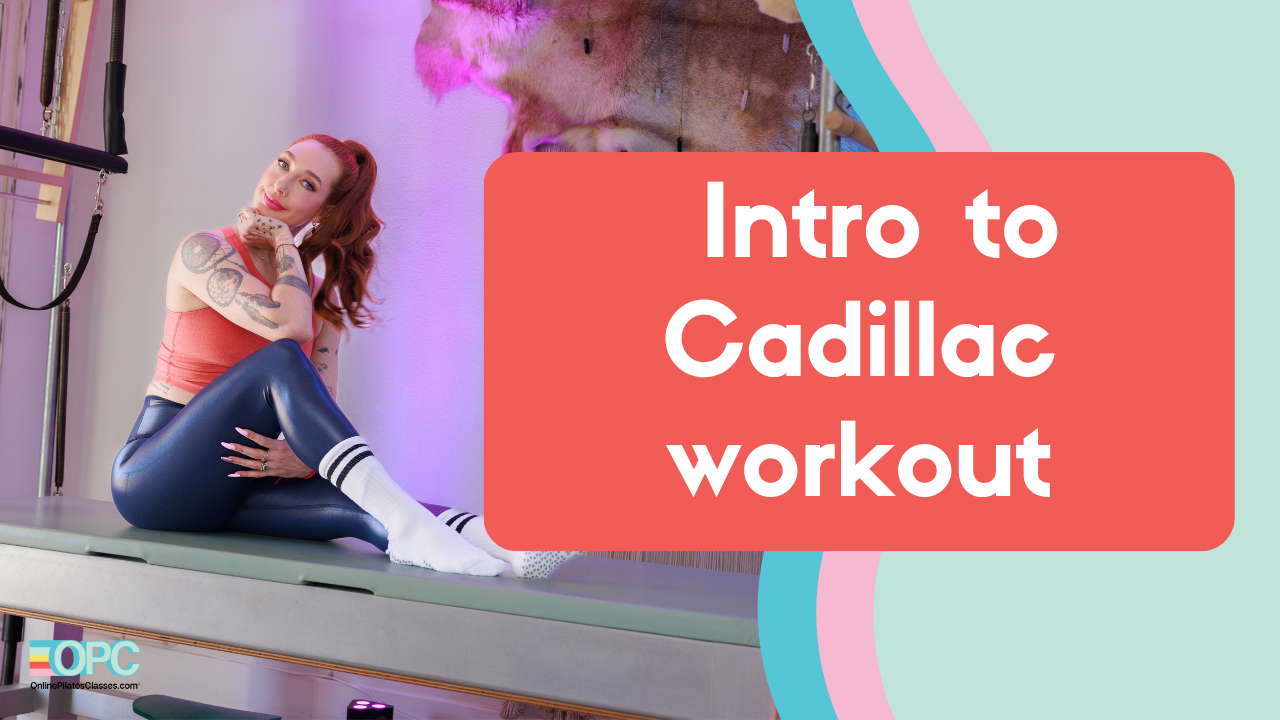
If the clicking happens during Single Leg Stretch or other exercises where the leg transitions from bent to extended, look at how the leg is straightening. It’s likely drifting up or dropping down rather than extending straight out. Leg spring exercises on the Cadillac are particularly helpful here.
Want to put all of this together? Check out my 30-minute Mat class with the magic circle, we work through these exercises at the beginning and build into a full Mat workout.

Strengthening Your Deep Core and Inner Thighs to Stop Hip Clicks
Inner Thigh Strength
Standing Single Leg Springs on the Cadillac or Tower are excellent for inner thigh strengthening in Pilates. If you don’t have access to that equipment, we have a standing leg exercise on our channel using a magic circle between the ankles, a great alternative.
Deep Core Strength
Understanding the Pilates two-way stretch is essential. Pilates isn’t about working the legs separately from the arms. It’s about the entire body working simultaneously from the center, with the upper body and lower body extending in opposite directions.
The Double Leg Stretch is a perfect exercise to develop deep core stability. You can have all the hamstring, glute, and inner thigh strength in the world, but if your abdominals aren’t also working through that two-way stretch, you’ll still experience some compression and imbalance.
One important note: this is never about squeezing the glutes. In Pilates, nothing should be overworked or underworked. Every part of the body works equally in every movement.
For more on managing overactive hip flexors, check out our video here.
When Should You Seek Professional Advice for Hip Clicks?
If your hip click is more than mild, sticky discomfort, if there’s actual pain, a sensation like a nerve charge, or the discomfort lingers after movement, it’s worth having an expert assess how your body is moving. There may be something deeper going on.
If it’s just a quiet click with no residual pain, it’s a sign to keep working on your hip strength and muscular balance through Pilates.
Final Thoughts on Fixing Hip Clicks in Pilates
Thank you for watching. I hope this gave you a clear picture of what you can work on next.
This hip clicking during Pilates is something I personally struggled with for a long time. It took me a while to understand that the answer wasn’t in adjusting my choreography or repositioning my leg. It was in doing the work to balance my muscular imbalances and get the most out of my Pilates practice. I want that for you too.
If you’re an OPC member and you’re experiencing hip clicks, film yourself doing the exercise and send it into the community. There are tips on how to do that in our app.
If you’re not yet an OPC member and you’d like personalized guidance on fixing hip clicks in Pilates, join us at onlinepilatesclasses.com/youtube. I’d love to take a look and help you get rid of those clicks for good.
Have an amazing day!