
Discover Relief with Pilates for Perimenopause
If you are navigating perimenopause, you’ve come to the right place. We’re gonna talk about perimenopause and how Pilates for perimenopause can help.
Welcome to Online Pilates Classes, the most supportive Pilates community worldwide. Enjoy new weekly classes from our incredible teachers. Download the OPC app today.
I’m over 40, so I have found my way into the perimenopause research and experience, and it is a lot of information, and it’s probably overwhelming. People are saying, do this, don’t do that. You have to do this twice, but never do this, and it’s kind of a lot. And so what I’m excited to talk to with you about today is how Pilates can help you in your journey of perimenopause and on the other side of it and some of the best Pilates exercises for perimenopause that support your body, mind, and overall well-being. And here’s why, one of the biggest things you need to make sure that you are watching is your cortisol level. Like, how much cortisol are you having in your body. If you have a stressful work life and then you’re also doing CrossFit or Hiit classes or a long cardio session, you’re bringing a lot of cortisol into your body, and so it’s important that we have movement practices and things in our life that can lower the cortisol levels that, in fact, don’t spike them at all. So I’m not knocking a CrossFit or a Hiit. What I am saying is it is important as you’re going through perimenopause, and on the other side that your movement practices match what your body needs.
Why Pilates for Perimenopause is Great
Pilates is low impact. Not only is an incredible strengthener for your center out and a wonderful thing to do to help improve your posture, but it is that movement meditation that we need to bring the levels down. And one of the most important things about perimenopause and exercise is watching the length of time you are moving. It can affect your sleep, which can affect your stress, which can be the snowball effect of feeling crazy. Your hormones all over the place, your energy levels are changing, your body is changing. That’s why having a perimenopause exercise routine like Pilates practice can be one of the best things you do for yourself, because you can do Pilates in 45 minutes or less, and that is a key number for people who are going through perimenopause or are post menopausal.
And also some other key benefits to adding Pilates to your life in perimenopause and after is balance. We need it. Here is the deal. I’m not saying I’m old now, but I’m going to be older someday, and you want to have balance as you get there, because you do not want to be falling. Injuries take a little longer to heal. The other thing is actually having supportive muscle strength so that aches and pains don’t bother us as much. A lot of times, women in perimenopause are feeling shoulder pain or stiffness or lower back issues that they didn’t have before. This is where Pilates exercises for lower back pain relief can make a big difference. And so having not just core strength, the way you hear about at the gym, but strength from your center out and mobility in your bodies and joints is key for feeling good and being able to go out there and feel like yourself and do the things you care about. For me, it’s not about you doing Pilates is the only thing because you’re perimenopause, it’s that you can feel like your strong, energetic self again, and Pilates can help you do that.
Core-Strengthening Exercises
Let’s talk about some exercises you can start with. And here’s the deal. I want to break these down into some containers so that you can pick and choose what you want to do, because it’s overwhelming to be a woman anyways, and then add perimenopause on top of it, so you don’t have to do all of these. You can pick the ones you like. So some core strengthening. If I say core, I mean your entire center exercises. The roll up, this is great. Stretches your back, challenges your outer hips, your inner thighs, works your center. It is more challenging than it looks. So give yourself space and grace to work on it and be in practice. The Double Leg Stretch is one of my absolute favorites. If you have one minute to work out and you do the double leg stretch, you are going to work your entire center, including those outer hips, inner thighs, and if you can get those arms to work from your back, your upper back, too.
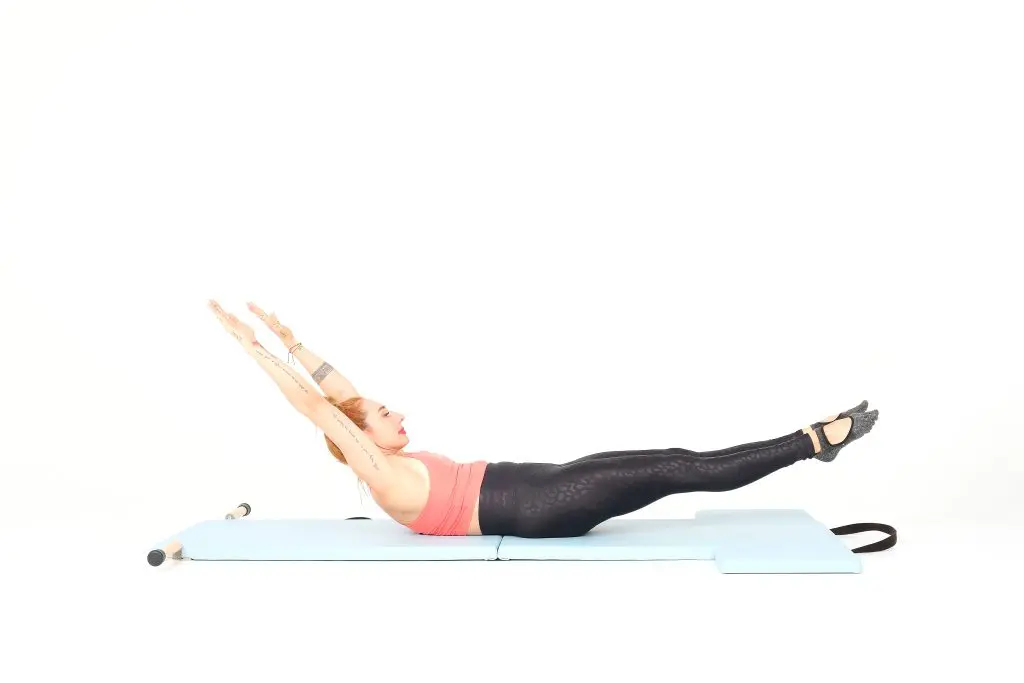
Double straight leg stretch, for this one, make sure you’re not swinging those legs. Okay, but this one is really up there for the challenge, and because the hands are interlaced behind your head, helping support your head and neck, but also encouraging your head and neck to push into your hands help strengthen those muscles of your neck and improve posture at the same time. Swan prep, we cannot just think that working our core is an Ab workout with crunches, we have to start changing that our working our core is a full body, full plane, different ranges of motion, kind of workout. And so the swan prep helps strengthen all of your back body pulls everything in place you are going to feel, hamstrings, glutes, upper back, it is a lot of things. Please make sure you drop those shoulders. And thigh stretch. This is one of my favorite if you’re ever quizzed, what is her favorite Mat exercise? I’m not saying it’s my favorite one, but it’s the one I will never skip. It’s a thigh stretch. We have to open our hips, we have to strengthen the muscles around our legs. And this one stretches the quads while also working the hamstrings and the glutes. You are welcome. If you are new to Pilates and you’re wanting just a class you can follow along with, we have a 25-minute Pilates Mat class for beginners. It’s perfect for you, and 25 minutes is less than 2% of your day.
Exercises for Spinal Mobility
Now let’s add in a few more exercises to get that spine moving, some spinal mobility, because Joe Pilates would say you’re only always old as your spine is young. First up, we have spine stretch forward. It’s a lot like the roll up, but you start seated. So if the roll up is difficult for you, this might be where you want to start. Make sure that you’re not bending too far forward. So your back starts to flatten out and your hip flexor start to tighten. Really work the stretch of the spine in this exercise. And extra credit, dig those heels down, your hamstrings and glutes get something too. Double leg kick. Okay, this one so, so good. First of all, it is going to stretch the shoulders that get those elbows to fall down. Second, it’s going to challenge that Swan prep we did, open the chest, strengthen the upper back, but also you’re doing hamstring curls, so you are getting a full body, everything in this one, and stretching your neck. But so, so key to work our spines against gravity as much as we can. And spine twist, oh my goodness. Now this one, this one for your quizzes, is my favorite twist in Pilates, it is a spine twist. It requires a really great inner thigh, outer hip strength. You need to work those legs together so they don’t do a little shimmy and cause you to turn. Second, it is the deepest twist you can give yourself if you’re struggling to have your arms out to the side, put them on your shoulders. I get you. I know sometimes our shoulders don’t feel so good, so put them right here, so you don’t overwork those while you’re working the twist of your spine.
Balance and Posture Builders
Okay, so first of all, every exercise I gave you is going to help with that posture, but we’ve got a few more we can add in here. The first one for balance is our marching exercise. This is my favorite exercise. If you have very little time and you’re staying around, I do this at the airport. You just layer those arms and lift those legs as high as you can. It gets the heart rate up in a good way. It challenges your balance because you’re trying not to sway side to side to side. And this is the best part. Next time you trip, your legs are just gonna march right out of it. I promise you, you will fall better. You are welcome. Swimming on the Mat. This is not easy, okay? I put it down here because it does take a little bit more core strength and some coordination, but it is going to challenge your balance and you’re gonna work your posture, because, again, we’re strengthening the entire back body, but you’re not allowed to rock side to side.
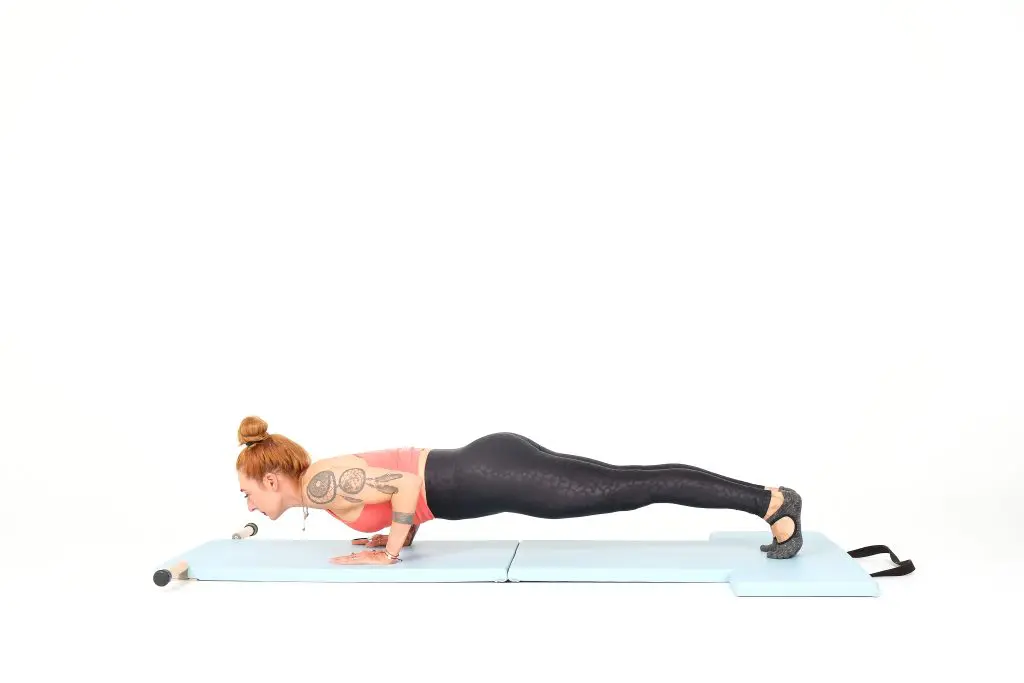
So you’re gonna really work that balance while you’re doing it. Do it for two cycles of breathing, not too much. And lastly, I know you’re gonna hate me, but we all got to do some push ups. Okay? If you can’t do them on the floor, you do them at a wall. All right. Push ups are so great, and in Pilates, they require the whole body to work. So these are not your fitness push ups. These are not your gym push ups. They are a whole body exercise. So squeeze those heels together, squeeze your legs together, get your glutes on. Ladies, we have more leg strength than arm strength, typically. So use your legs and the pushups are gonna feel so much better. You need a full body workout, plus you’re gonna work your core and you’re gonna have better balance. And if you’re like, Okay, this sounds really good, but what are the other benefits of doing Pilates? We’ve got this great video for you on why you should be doing Pilates, all the benefits that you need at any stage of life.
Bonus Moves for Strength & Control
Alright, for my overachievers, I got three more moves for you. I know some of you are like that can’t be enough. So here we go, side leg kicks. Not just about hip mobility, but really strengthening the muscles your hips. Please make sure when you do these you don’t look like Jane Fonda. I mean, I love her. She’s stunning. We all can’t wait to age like Jane Fonda, but we’re not going to tip those hips back. They don’t get to hike up into your rib cage. You got to make sure the hips stay stacked the whole time, alright? Then we have side bend. So this requires you to do a side plank and then lift your hips, not from your shoulder. If you are worried about being on your shoulder, you can actually do side a side plank at the wall to start and build your strength and stamina up.
And lastly, we have our leg pulls. So you are going to do this in a plank position. Kick a leg up and open the front of the hips, and have a great time. It’s really fun to challenge your coordination, makes you focus, takes out mind has so many other things going on, and brings you back to your center. Enjoy that movement meditation. Bring down that cortisol, and have a movement practice that works for where your body is going, because it’s really easy when you’re in perimenopause to think about all the things that are going away from your life, but on the other side of this, you’ve rewired your brain, and you’re going to have a whole different life ahead of you. So take time to get your know yourself and take care of yourself. And if you want to look at more benefits of Pilates for women’s health, we have a great video for you, because there’s a lot of different reasons why Pilates can be great for you, even if you’re not at perimenopause yet or you’re on the other side. So, check it out here.
Helpful Tips for Your Practice
Alright. Lastly, I always want to talk about some helpful tips, just some reminders, ladies, go at your own pace. Always, if you take a class from someone and it’s going faster than you feel, you actually don’t have to keep up with them. Breathe, in and out through the nose. It’s extremely grounded, it’s extremely calming, and it’s super super healthy for you, alright? Take breaks if you are not feeling awesome, take a deep breath. Skip a couple exercises, pick it back up. You are going to get some benefit from doing whatever you can versus doing nothing, and you definitely don’t want to push yourself past what you can do. You’re not going to feel great the next day. So in perimenopause, you’re really learning to listen to your body, and Pilates allows you to do that, especially at OPC, we believe finishing is optional, so you do what you want to do. If you are interested in doing some Pilates, but you need some supportive help. We actually have a really fun series. It’s on the Mat, or if you have access to a Reformer, we have that too. And the first week is 10 minutes. The second week is 20 minutes, then it goes to 30 and 40. By the way, if you just wanted the first 10 minutes of every week, you can do that, but you we can do with a guided classes and with some helpful tips on how to make it a habit in your life without stressing you out. So go to opc.me/challenge to sign up. It’s all free.
Pilates Support for Perimenopause Journey
Thank you so much for watching this. I hope this was helpful and gave you some ideas on how you can get some movement in your life and make perimenopause a little easier to navigate. Also, at OPC what we’re super, real proud of is that all of the teachers are either in perimenopause or on the other side and they practice Pilates for perimenopause. And so if you would like to work out with women who have gone through or going through what you’re going through, you have found the place onlinepilatesclasses.com/youtube, we are real bodies doing Pilates. Our members are also just like you, and we are so excited to support you and to be the reminder you need that some Pilates is better than no Pilates, that finishing is optional, that listening to your body is the best thing you can do. That is brave and courageous to replace something you can’t do yet with something that you can and you don’t ever have to guess if you’re doing Pilates correctly, because we will give you feedback on the exercise you’re struggling with. So go to OPC YouTube, and join us and not feel alone in this thing that you’re going through, because you’re not going through it alone. We’re all going through it together.